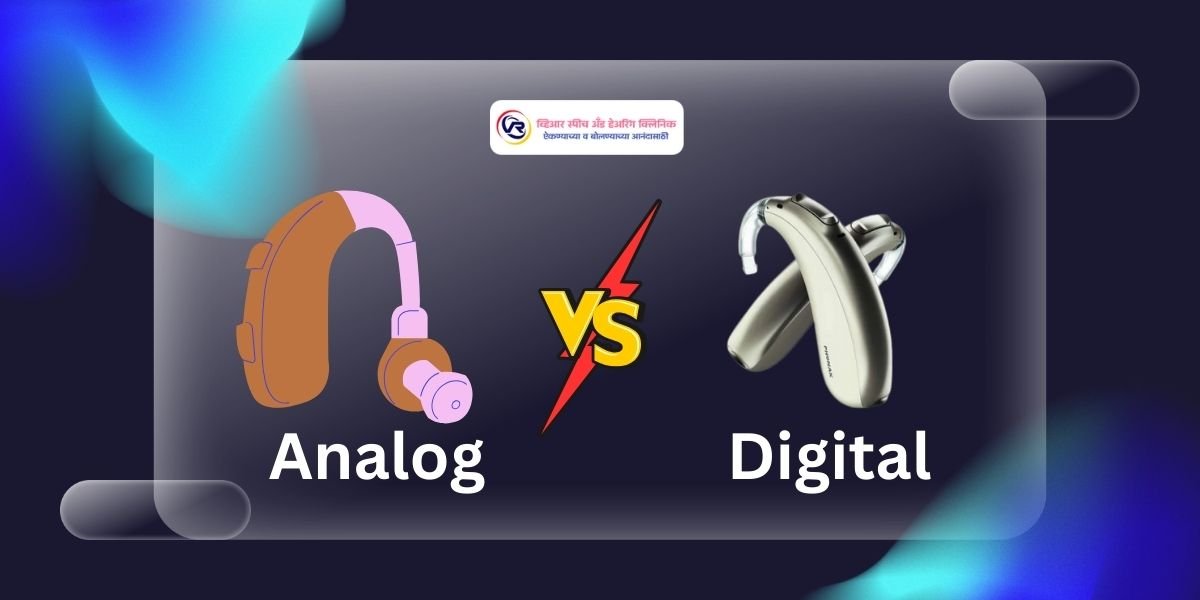

Hearing loss is a common concern that affects millions of people worldwide. Hearing aids are one of the most effective solutions to improve hearing and enhance quality of life. However, when choosing a device, many people find themselves asking an important question: Analog or Digital hearing aids — which one is better?
To help you make an informed choice, this guide explains the differences between analog and digital hearing aids, their features, pros and cons, and how to choose the best option for your needs.
Understanding Hearing Aids: Analog vs Digital Overview
Hearing aids are electronic devices that amplify sound through a microphone, amplifier, and speaker. They come in two primary types:
1. Analog Hearing Aids
-
Amplify all sounds (speech and noise) equally.
-
Use traditional technology.
-
Feature manual controls and simple functionality.
2. Digital Hearing Aids
-
Convert sound into digital signals.
-
Use advanced processing to separate speech from noise.
-
Provide a more personalized and comfortable listening experience.
Both types have their benefits, but the right one depends on your hearing profile, lifestyle, and personal preferences.
What Are Analog Hearing Aids?
Analog hearing aids are the traditional hearing devices that process sound as continuous sound waves. They offer basic amplification and are generally simpler to use.
Key Features of Analog Hearing Aids
-
Continuous sound wave amplification
-
Simple manual volume controls
-
Basic preset programs
-
Lower power consumption
-
Budget-friendly
-
Slightly larger in size compared to modern digital devices
Pros of Analog Hearing Aids
✔ Cost-Effective
Analog models are more affordable and suitable for individuals on a tight budget.
✔ Easy to Use
Simple controls make them ideal for elderly users or those who dislike technology.
✔ Durable
Fewer electronic components reduce technical issues.
Cons of Analog Hearing Aids
✘ Weak Noise Filtering
Amplifies all sounds equally — including unwanted background noise.
✘ Limited Customization
Not ideal for complex hearing loss profiles.
✘ Old Technology
Becoming rare due to limited support and declining availability.
What Are Digital Hearing Aids? How Do They Work?
Digital hearing aids convert sound into digital signals and process them using advanced algorithms. This allows them to differentiate speech from noise, reduce feedback, and enhance clarity.
Key Features of Digital Hearing Aids
-
Advanced noise reduction
-
Feedback cancellation
-
Directional microphones
-
Bluetooth connectivity
-
Multiple listening programs
-
App-based adjustments and remote support
Pros of Digital Hearing Aids
✔ Superior Sound Quality
Enhances speech clarity even in noisy environments.
✔ Highly Customizable
Programmed according to your specific hearing loss.
✔ Modern Connectivity
Pairs with smartphones, TVs, and companion apps.
✔ Compact and Discreet
Most modern digital aids are smaller and more comfortable.
Cons of Digital Hearing Aids
✘ Higher Cost
Advanced technology comes with a premium price.
✘ More Complex
May require some learning for first-time users.
✘ More Power Usage
Rechargeable or frequent battery changes may be needed.
Analog vs Digital Hearing Aids: Key Differences
| Feature | Analog Hearing Aids | Digital Hearing Aids |
|---|---|---|
| Sound Processing | Continuous amplification | Digital signal processing |
| Customization | Limited | Highly customizable |
| Noise Reduction | Basic/None | Advanced noise cancellation |
| Connectivity | None/Limited | Bluetooth, app control |
| Size & Design | Larger | Sleek, compact |
| Cost | Lower | Higher |
| Technology | Traditional | Advanced (AI-enabled in many models) |
| Availability | Decreasing | Widely available |
Conclusion: Digital hearing aids outperform analog in almost every aspect, except price and simplicity.
How to Choose the Right Hearing Aid for You
Your ideal hearing aid depends on several factors:
1. Budget
-
Analog: More affordable
-
Digital: Higher cost but more features
2. Lifestyle
-
Active lifestyle: Digital aids with noise reduction and connectivity
-
Simple needs: Analog may be enough
3. Degree of Hearing Loss
-
Mild: Analog may work
-
Moderate to severe: Digital recommended
4. Comfort with Technology
-
Tech-savvy: Digital aids are ideal
-
Prefer simplicity: Analog aids are easier
5. Future Requirements
Digital aids offer updates and long-term support, giving more value over time.
So, Are Digital Hearing Aids Better Than Analog?
Yes, in most cases.
Digital hearing aids provide clearer sound, greater comfort, advanced noise control, and personalization. However, analog hearing aids remain beneficial for people who want an affordable, simple, and durable option.
The best hearing aid is the one that matches your hearing needs, budget, and daily lifestyle.
FAQs: Analog vs Digital Hearing Aids
1. Are analog hearing aids still available?
Yes, but they are becoming less common as most manufacturers now focus on digital technology.
2. Which hearing aid is best for severe hearing loss?
Digital hearing aids are better because they offer precise customization and stronger amplification.
3. Are digital hearing aids worth the price?
Yes, they offer superior sound quality, better noise reduction, Bluetooth connectivity, and long-term value.
4. Can I upgrade from analog to digital hearing aids?
Absolutely. Many users upgrade to digital for better comfort and speech clarity.
5. Do digital hearing aids consume more battery?
Yes, but many come with rechargeable options to overcome this issue.
6. Which hearing aid is best for elderly users?
For elderly users who prefer simplicity, analog may be easier. For improved clarity and communication, digital is recommended.
7. Do digital hearing aids work with smartphones?
Yes, most digital models offer Bluetooth connectivity for calls, music, and app control.
Leave a Comment