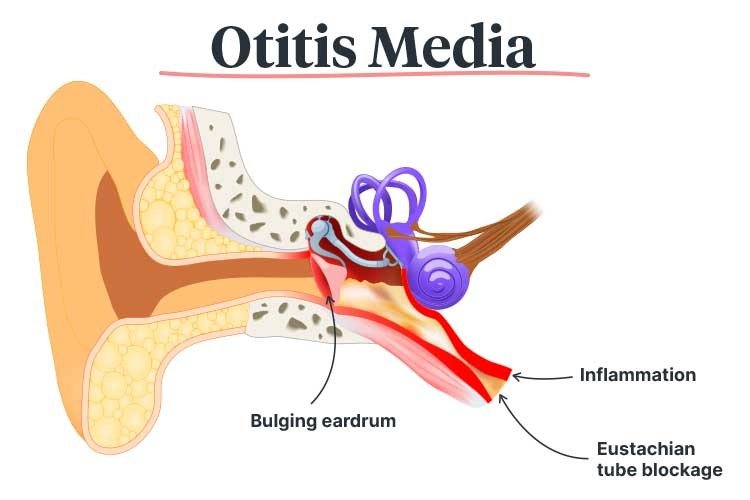

Glue ear, also known as Otitis Media with Effusion (OME), is a very common ear condition that mostly affects children but can occasionally impact adults as well. It occurs when thick, sticky fluid collects behind the eardrum, affecting the normal movement of sound through the middle ear. This leads to hearing loss, ear discomfort, and sometimes balance issues.
In this comprehensive guide, we cover glue ear symptoms, causes, diagnosis, treatment options, preventive tips, and frequently asked questions.
What Is Glue Ear?
Glue ear is a condition in which the middle ear space fills with thick mucus-like fluid instead of air. Normally, the middle ear remains air-filled due to the functioning of the Eustachian tube, which connects the middle ear to the throat.
Its role is to:
-
Regulate air pressure
-
Allow fluid drainage
-
Keep the middle ear ventilated
When the Eustachian tube becomes blocked, fluid accumulates and thickens over time, becoming sticky like glue. This condition is known as Glue Ear or Otitis Media with Effusion.
How Common Is Glue Ear?
Glue ear is highly prevalent in children:
-
About 20% of preschoolers have glue ear at any given time
-
80% of children experience at least one episode before age 10
-
Only 5% adults are affected
Children are more susceptible due to their narrow and flat Eustachian tubes, which do not drain fluid efficiently.
Causes of Glue Ear
The most common cause is Eustachian tube blockage, which can occur due to:
In Children
-
Frequent colds and upper respiratory infections
-
Allergies
-
Ear infections
-
Enlarged adenoids
-
Narrow or immature Eustachian tubes
-
Cleft palate
-
Exposure to smoke
-
Poor air quality
-
Bottle-feeding while lying down
-
Germ exposure in daycare settings
In Adults
-
Sinusitis
-
Allergies
-
Sudden air pressure changes
-
Smoking
-
Nasal polyps or chronic infections
Symptoms of Glue Ear in Children
Parents should observe for:
-
Difficulty hearing (turning up TV volume, not responding to soft sounds)
-
Balance issues or unsteadiness
-
Irritability
-
Mild earache or ear pressure
-
Delayed speech or unclear speech
Symptoms of Glue Ear in Adults
Adults may experience:
-
Hearing loss (most common)
-
Earache or pressure
-
Tinnitus (ringing or buzzing)
-
Ear popping
-
Occasional ear discharge
-
Fatigue due to constant discomfort
How Is Glue Ear Diagnosed?
Diagnosis is simple and non-invasive.
1. Otoscopy
A doctor uses an otoscope to check the eardrum. They may see:
-
Retracted (pulled-in) eardrum
-
Cloudy or dull eardrum
-
Fluid levels or bubbles behind the eardrum
2. Tympanometry
This test measures eardrum movement to confirm fluid buildup.
How Do You Get Rid of Glue Ear in Children?
Glue ear usually clears on its own within 3 months. If symptoms persist, treatment is necessary.
Medications
-
Antibiotics if bacterial infection is suspected
-
Decongestants (e.g., Pseudoephedrine)
-
Antihistamines (e.g., Phenergan) for allergy-related cases
Other Treatment Options for Glue Ear
If the problem does not resolve naturally, the following treatments may be recommended:
1. Ear Grommets (Ventilation Tubes)
Small tubes inserted into the eardrum to:
-
Drain the fluid
-
Allow air into the middle ear
-
Provide immediate hearing improvement
Grommets fall out naturally in about 6–12 months.
2. Adenoidectomy
Removal of enlarged adenoids when:
-
They block the Eustachian tube
-
Cause repeated ear infections
-
Lead to persistent glue ear
3. Autoinflation
A simple non-surgical technique to open the Eustachian tube.
Methods include:
-
Blowing up a nasal balloon
-
Performing the Valsalva maneuver
-
Pinching the nose and swallowing
Not recommended for children under 3 years.
Treatment for Glue Ear in Adults
Adults undergo similar treatments:
-
Medications
-
Steam inhalation
-
Autoinflation
-
Grommets
-
Allergy management
-
Surgery in rare cases
Can Glue Ear Cause Permanent Damage?
If untreated for long periods, glue ear can lead to:
-
Eardrum damage
-
Chronic infections
-
Speech and language delay in children
-
Learning difficulties
-
Rarely, long-term hearing problems
Early diagnosis and treatment prevent complications.
Exercises for Glue Ear Relief
These simple exercises may help open the Eustachian tube:
-
Valsalva maneuver
-
Nose pinching + swallowing
-
Yawning frequently
-
Chewing gum
-
Steam inhalation
Caution: Avoid forceful blowing, especially after ear surgery or with a ruptured eardrum.
How to Prevent Glue Ear
-
Keep children away from passive smoke
-
Treat allergies promptly
-
Feed infants in an upright position
-
Avoid pacifiers after 10 months
-
Practice good hand hygiene
-
Reduce exposure to colds and infections
-
Maintain clean indoor air
FAQs About Glue Ear
1. Is glue ear painful?
Glue ear usually isn’t painful, but children may experience pressure or mild discomfort.
2. How long does glue ear last?
Most cases clear within 6–12 weeks, but some may take up to 3 months.
3. Can glue ear cause hearing loss?
Yes. Glue ear causes temporary hearing loss, but if untreated for long, it may affect speech development in children.
4. Is glue ear contagious?
No. Glue ear itself is not contagious, but the colds and infections that cause it can spread.
5. When do children need grommets?
If glue ear lasts over 3 months and affects hearing, speech, or learning, grommets are recommended.
6. Can adults get glue ear?
Yes, but it is less common. Adults may develop it after sinus infections, allergies, or air pressure changes.
7. Can glue ear come back after treatment?
Yes, especially in children with allergies, enlarged adenoids, or recurrent infections.
8. Can flying worsen glue ear?
Yes. Pressure changes during flying can increase ear discomfort.
9. Is glue ear the same as an ear infection?
No. Glue ear involves fluid without infection, while an ear infection has pain, fever, and inflammation.
10. How can I help my child at home?
-
Steam inhalation
-
Gentle ear exercises
-
Avoid exposure to smoke
-
Monitor speech and hearing

Leave a Comment