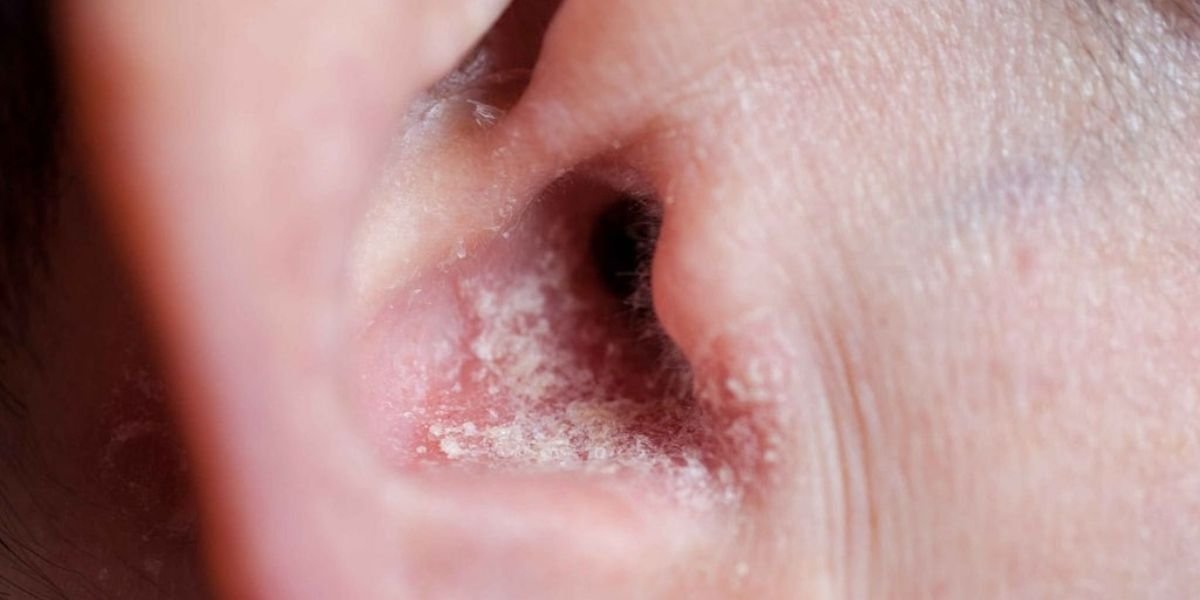

Skin conditions like eczema and psoriasis don’t just affect visible areas—they can also occur inside the ear canal, causing itching, dryness, flaking, and even hearing problems. Because the skin inside the ears is very delicate, these conditions can be especially uncomfortable and sometimes lead to complications if left untreated.
This article explains the causes, symptoms, differences, and treatment options for eczema and psoriasis affecting the ear canal.
What Is Eczema of the Ear Canal?
Eczema (also called dermatitis) is an inflammatory skin condition that causes dryness, itching, redness, and flaking.
When eczema occurs in the ear canal, it is known as aural eczematoid dermatitis.
Common Causes
-
Allergic reactions (earbuds, hearing aids, earrings, shampoos)
-
Over-cleaning or scratching the ear
-
Skin sensitivity
-
Atopic dermatitis history
-
Weather changes (dry climate)
What Is Psoriasis of the Ear Canal?
Psoriasis is an autoimmune condition that causes rapid skin cell buildup, leading to thick, scaly patches.
Psoriasis inside or around the ear canal can cause itching, blockage, and discomfort.
Common Causes/Triggers
-
Immune system flare-ups
-
Stress
-
Cold weather
-
Infections
-
Certain medications
-
Genetics
Symptoms of Eczema or Psoriasis in the Ear Canal
While both conditions may look similar, they can have distinct features.
Common Symptoms
-
Itching inside the ear canal
-
Dry, flaky skin or scaling
-
Redness or irritation
-
Fluid discharge (rare)
-
Crusting around the ear
-
Feeling of ear blockage
-
Temporary hearing loss due to debris buildup
Symptoms More Common in Psoriasis
-
Thick, silvery-white scales
-
Patches behind the ears or on the scalp
-
Recurring flare-ups
Are Eczema and Psoriasis Dangerous?
They are usually not dangerous, but scratching or ignoring symptoms may lead to:
-
Ear canal infections
-
Worsening inflammation
-
Wax blockage
-
Temporary hearing loss
-
Cracks in skin (fissures)
Early treatment helps prevent complications.
Diagnosis
Your ENT or audiologist may:
-
Examine the ear canal with an otoscope
-
Check for skin flaking, inflammation, or discharge
-
Look for signs of infection
-
Take a small skin sample in rare cases
Treatment Options
1. Topical Steroid Creams or Ear Drops
Used to reduce itching, swelling, and redness.
(Examples: hydrocortisone drops—only under medical supervision.)
2. Moisturizing Ear Drops / Emollients
Help reduce dryness and flaking.
Avoid using oils without consulting a doctor.
3. Medicated Creams or Ointments
For psoriasis:
-
Vitamin D analogues
-
Coal tar preparations
-
Calcineurin inhibitors
4. Avoiding Triggers
-
Remove allergenic earbuds/hearing aids temporarily
-
Use hypoallergenic materials
-
Avoid over-cleaning or using cotton buds
-
Switch to mild shampoos and soaps
5. Treating Ear Infections (if present)
Antibiotic or antifungal drops may be prescribed.
6. Audiologist Ear Cleaning
Safe removal of flakes or debris to restore hearing.
Home Care Tips
-
Keep ears dry after bathing.
-
Don’t insert cotton buds or sharp objects.
-
Use hearing aid domes or earbuds with hypoallergenic silicone.
-
Apply moisturizers recommended by your doctor.
-
Manage stress (helps psoriasis).
When to See a Doctor
Seek medical help if you experience:
-
Persistent itching or pain
-
Discharge with foul smell
-
Sudden hearing loss
-
Bleeding or severe dryness
-
Repeated flare-ups
Conclusion
Eczema and psoriasis of the ear canal are common but manageable skin conditions. Early diagnosis and proper care can relieve irritation, prevent infections, and improve hearing comfort—especially for people using hearing aids or earbuds regularly. If symptoms persist, visit an ENT specialist or audiologist for proper evaluation and treatment.
Leave a Comment