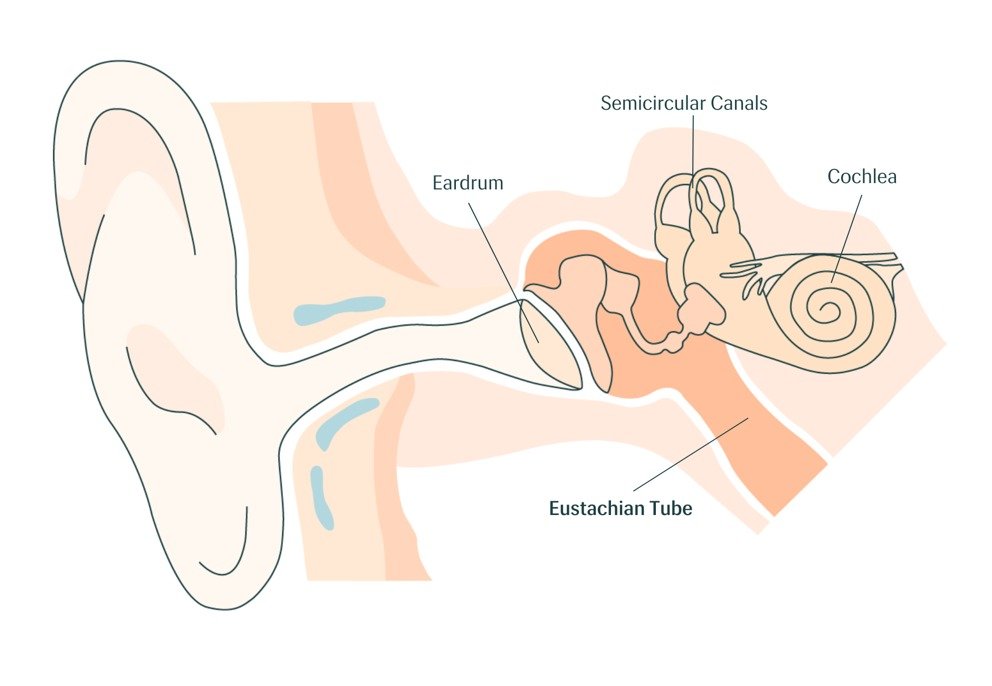
The Eustachian tube is a small canal that connects the middle ear to the back of the nose. Its main job is to equalize pressure, drain fluid, and allow proper hearing. When this tube becomes blocked, inflamed, or does not open/close normally, it leads to Eustachian Tube Dysfunction (ETD) — a common reason for ear fullness, popping sounds, and pressure discomfort.
In this article, we break down the most common Eustachian tube problems such as ETD, barotrauma, and ear-block/popping sensations, along with treatment options and prevention tips.
What Is Eustachian Tube Dysfunction (ETD)?
Eustachian Tube Dysfunction occurs when the tube does not open properly, resulting in poor pressure regulation inside the middle ear. This can cause muffled hearing and uncomfortable pressure differences.
Common Causes of ETD
-
Cold, flu, or sinus infection
-
Allergies (allergic rhinitis)
-
Nasal congestion
-
Blocked adenoids
-
Smoking
-
Rapid altitude changes
-
Chronic upper respiratory issues
Symptoms of Eustachian Tube Problems
People experiencing ET dysfunction often feel:
-
Ear popping
-
Ear pressure or blocked sensation
-
Mild ear pain
-
Muffled hearing
-
Ringing in ears (tinnitus)
-
Dizziness or imbalance
-
Clicking sounds when swallowing
If symptoms last more than 6 weeks, it may indicate chronic ETD.
Barotrauma (Airplane or Diving Pressure Problems)
Barotrauma is an injury caused by sudden pressure changes, especially during:
-
Flying
-
Elevators
-
Scuba diving
-
Mountain travel
When the Eustachian tube fails to equalize pressure quickly, it causes:
-
Sharp ear pain
-
Intense pressure
-
Temporary hearing loss
-
Severe popping
-
Risk of eardrum injury (in severe cases)
Diagnosis
An ENT specialist may perform:
-
Ear examination
-
Tympanometry
-
Hearing test (audiometry)
-
Nasal/endoscopic evaluation
Treatment for Eustachian Tube Dysfunction
1. Medications
-
Decongestants (short-term use)
-
Antihistamines for allergies
-
Nasal steroid sprays
-
Pain relievers for discomfort
2. Home Remedies
-
Swallowing, yawning
-
Chewing gum
-
Performing Valsalva maneuver (gently)
-
Warm compress around the ear
-
Steam inhalation
3. Medical Procedures (for chronic ETD)
-
Eustachian Tube Balloon Dilation
Helps open the tube permanently. -
Myringotomy (tiny hole in eardrum)
-
Grommet (ventilation) tube insertion
How to Prevent Eustachian Tube Problems
-
Treat allergies promptly
-
Avoid smoking/exposure to smoke
-
Use nasal sprays during colds
-
Chew gum during flights
-
Descend slowly while diving
-
Stay hydrated
-
Manage sinus issues
FAQs on Eustachian Tube Problems
1. How long does Eustachian Tube Dysfunction last?
Most cases improve within a few days or weeks. Chronic cases may last longer than 3 months and require treatment.
2. Is ETD serious?
Usually not serious, but untreated chronic ETD can lead to hearing problems, ear infections, or eardrum damage.
3. How can I quickly unblock my ears?
Try swallowing, yawning, chewing gum, or gently performing a Valsalva maneuver. If symptoms persist, consult an ENT.
4. Can allergies cause ETD?
Yes. Allergies cause nasal inflammation, which affects the Eustachian tube function.
5. What should I do during a flight if my ears get blocked?
Use nasal decongestants, chew gum, stay awake during takeoff/landing, and perform pressure-equalizing maneuvers.
6. When should I see a doctor?
Seek medical help if:
-
Symptoms last more than 2–4 weeks
-
You experience severe pain
-
Hearing suddenly becomes worse
-
There is ear discharge